
Hundreds of Trucks With Dangerous Brake Defects Were Still Sharing Roads With Everyday Drivers
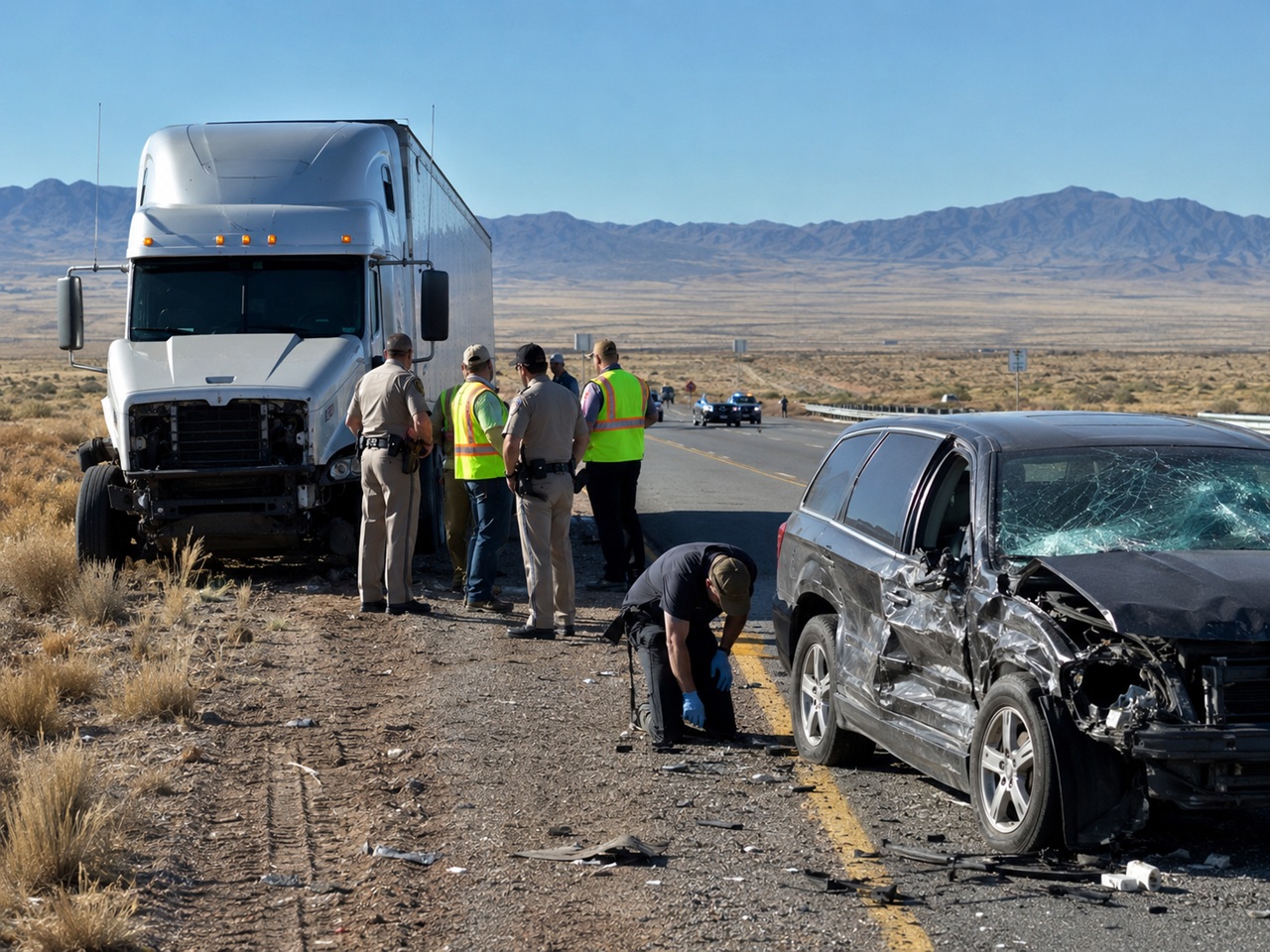
Brake Safety Day Data Shows Why Defective Trucks Put New Mexico Drivers At Risk
Every day on New Mexico highways, motorists share the road with commercial trucks that can weigh up to 80,000 pounds. Most drivers don’t think twice about the semi in the next lane, but that truck’s brakes may be the one mechanical system standing between ordinary traffic and a catastrophic collision. When those brakes aren’t properly inspected, repaired, and maintained, a routine drive on I-40, I-25, or a rural New Mexico highway can become a serious truck accident claim.
On April 14, 2026, the Commercial Vehicle Safety Alliance conducted Brake Safety Day, an unannounced, single-day inspection effort across 47 jurisdictions in the United States, Canada, and Mexico. According to The Trucker, certified inspectors completed 4,021 commercial vehicle inspections in one day. They placed 574 vehicles out of service for brake-related violations serious enough to make continued operation unsafe.
New Mexico truck accident attorney Andras Szantho of Szantho Law Firm, P.C., represents injury victims in Albuquerque, Santa Fe, and across the state. He’s seen what happens when a commercial truck can’t stop in time. If you or a family member was hurt in a collision with a large truck in New Mexico, brake failure may be a key part of the investigation.
What Did Inspectors Find During Brake Safety Day?
Brake Safety Day is not a routine, scheduled sweep that carriers can prepare for in advance. It is unannounced by design. That matters because the results reflect real-world brake conditions on trucks that were already in active service and believed to be road-legal.
The numbers were serious. Of the 4,021 commercial vehicles inspected, 574 were placed out of service immediately, meaning inspectors determined that continued operation would create a safety hazard. That’s roughly one in every seven inspected vehicles. The remaining 3,447 vehicles, or 85.7 percent of those inspected, did not have brake-related out-of-service violations.
For context, an out-of-service violation is not a paperwork issue. It’s a safety defect serious enough to keep a commercial vehicle off the road until the violation is corrected. In New Mexico, where Interstate 40 and Interstate 25 carry heavy freight traffic every day, defective truck brakes are not an abstract safety concern. They’re a real threat to drivers, passengers, motorcyclists, and pedestrians.
What Kinds Of Brake Defects Were Found?
The violations found during Brake Safety Day covered several parts of the brake system. CVSA’s 2026 emphasis was on drums and rotors, which are critical components in slowing and stopping a heavy commercial vehicle. But inspectors also found problems throughout the brake system.
Reported violations included:
- Brake Hoses and Tubing Failures: This was one of the largest categories of out-of-service violations, with 121 vehicles flagged. Cracked, leaking, or damaged brake lines can cause a loss of braking pressure when a driver needs to stop.
- Other Brake System Deficiencies: Inspectors placed 193 vehicles out of service for violations, including inoperative tractor protection systems, failed hydraulic or electric brakes, inoperative parking or emergency brakes, and malfunctioning low-air warning devices.
- Drum and Rotor Violations: Inspectors found 43 drum and rotor violations, 21 of which were serious enough to trigger an out-of-service order. Worn or cracked drums and rotors can reduce a truck’s ability to generate stopping friction.
- Steering Axle Brake Failures: Forty-seven vehicles had out-of-service violations tied to steering axle brakes. These front-wheel brakes help the driver control the tractor during braking, especially in emergencies.
- Air Loss Rate Failures: Forty vehicles failed the air loss rate test, meaning their air brake systems were losing pressure faster than safety standards allow. A truck that can’t maintain air pressure can’t reliably brake under sustained use.
- Performance-Based Brake Tester Failures: Of 349 vehicles tested using a performance-based brake tester, 26 failed to achieve the required minimum braking efficiency of 43.5 percent.
These are not minor maintenance problems. They are defects that can affect whether a truck stops, how long it takes to stop, and whether the driver can maintain control when traffic changes suddenly.
Why Are Brake Failures So Dangerous In Commercial Truck Crashes?
A fully loaded commercial truck can weigh up to 80,000 pounds. At highway speed, that weight creates crash forces far beyond what a passenger vehicle can withstand. A properly maintained tractor-trailer traveling 65 mph may need about 525 feet to come to a complete stop under ideal conditions. A truck with defective brakes may need much more room.
Think about what that means when traffic suddenly slows on I-40 near Albuquerque, when a driver enters a rural highway, or when congestion builds near Santa Fe. The truck driver presses the brake pedal, but if the hoses are leaking, the drums are worn, the rotors are cracked, or the air system is losing pressure, the truck may not slow down as it should. By the time the driver realizes the problem, there may be no safe way to avoid impact.
Brake failure crashes can cause devastating injuries. Rear-end impacts at highway speed, override crashes, underride collisions, jackknife wrecks, and runaway situations on steep grades can all leave victims with traumatic brain injuries, spinal cord injuries, fractures, internal injuries, amputations, burns, or fatal injuries.
FMCSA’s Large Truck Crash Causation Study found that brake problems were coded for almost 30 percent of trucks involved in the study’s crashes, compared with only 5 percent of passenger vehicles. That does not mean brake problems caused every one of those crashes, but it shows why brake maintenance must be taken seriously in semi-truck accident investigations.
Who Is Responsible When A Truck’s Brakes Fail?
Liability in a truck crash caused by a brake failure is usually not limited to the driver. Federal trucking regulations place inspection, maintenance, and repair duties on multiple people and companies. Depending on what happened, several parties may share responsibility for a New Mexico truck crash caused by defective brakes.
Potentially responsible parties may include:
- The Trucking Company: Carriers are responsible for keeping their fleets in safe operating condition. A company that ignored brake inspection reports, delayed repairs, skipped maintenance, or pushed unsafe trucks back onto the road may be directly responsible for the crash.
- The Truck Driver: Commercial drivers must inspect their vehicles and report mechanical defects. A driver who knew or should have known the brakes were unsafe and kept driving may share responsibility.
- A Third-Party Maintenance Company: Many carriers hire outside shops to inspect and repair brakes. If a maintenance provider missed a defect, performed faulty work, or certified an unsafe truck as road-ready, that company may be part of the case.
- A Parts Manufacturer: If a brake component failed due to defective design or manufacture, the manufacturer may face a product liability claim.
- A Broker or Shipper: In some cases, freight brokers or shippers may be examined if their choices, control, or pressure contributed to an unsafe haul. These claims are fact-specific and require careful investigation.
New Mexico truck accident liability can extend far beyond the person behind the wheel. Trucking companies, brokers, insurers, and other parties may have records showing who controlled the load, who maintained the vehicle, who inspected the brakes, and who determined the truck could remain on the road.
What Federal Regulations Govern Commercial Truck Brakes?
The Federal Motor Carrier Safety Administration sets minimum brake standards for commercial vehicles operating on U.S. highways. Under 49 CFR Part 393, Subpart C, commercial motor vehicles must have brakes adequate to stop and hold the vehicle or combination of vehicles. The rules also address required brake systems, brakes on all wheels, emergency braking, brake hoses and tubing, brake chambers, linings, pads, drums, rotors, and related components.
The minimum braking efficiency standard matters because it gives investigators a measurable benchmark. When a truck cannot meet required brake performance standards, the issue is not just a maintenance concern. It may be evidence that the truck should not have been operating at all.
49 CFR § 393.47 also requires that brake actuators, slack adjusters, linings, pads, drums, and rotors be constructed, installed, and maintained to provide safe and reliable stopping. In an injury case, these federal rules can become key evidence of what the trucking company, driver, or maintenance provider should have done before the crash.
How Does Brake Failure Affect Truck Accident Claims In New Mexico?
New Mexico follows pure comparative fault, which means an injured person’s compensation may be reduced by their percentage of responsibility, but they are not automatically barred from recovery simply because someone argues they share fault. In a case involving a brake failure, the defense may still try to blame the injured driver, roadway conditions, traffic, or another vehicle. But if the truck’s brakes were defective, the focus should stay on who allowed an unsafe commercial vehicle to remain in service.
Brake failure claims often involve larger damages than typical rear-end accident cases because the impact forces can be extreme. Victims may need emergency care, surgery, hospitalization, rehabilitation, medical equipment, long-term treatment, and future care. They may also lose income, earning capacity, and the ability to live the way they did before the crash.
When records show a company knew about brake problems and chose not to fix them, the case may involve more than ordinary negligence. Punitive damages may be available in New Mexico when conduct is reckless, willful, wanton, malicious, fraudulent, or in bad faith. That’s why maintenance history, inspection reports, prior violations, and internal communications can be so important.
What Evidence Matters In A Brake Failure Truck Accident?
The investigation of a brake failure case looks different from a standard crash investigation. It requires preservation of the truck itself, inspection of the brake system, review of maintenance records, and analysis of what the driver and company knew before the crash.
Important evidence may include:
- Driver Vehicle Inspection Reports: These reports can show whether the driver documented brake problems before or after trips.
- Maintenance and Repair Records: These records can reveal whether brakes were inspected, repaired, replaced, or ignored.
- Prior Out-Of-Service Violations: A carrier’s history of brake violations can show whether unsafe maintenance was a recurring issue.
- Electronic Control Module Data: ECM or black box data may show speed, braking, throttle position, and other information before impact.
- ELD Logs and Dispatch Records: These records may show whether the driver was rushed, fatigued, or pressured to keep moving despite safety concerns.
- Post-Crash Vehicle Inspection Results: A mechanical inspection can show the condition of drums, rotors, hoses, air lines, slack adjusters, and other brake components after the crash.
- Photos, Video, and Scene Evidence: Skid marks, impact points, dashcam footage, surveillance footage, and witness statements can help reconstruct the crash.
Because key trucking records can be overwritten, repaired, moved, or destroyed, preserving trucking company records quickly after a crash can make a major difference. The sooner evidence is secured, the harder it becomes for the trucking company to control the story.
How Do Trucking Companies And Insurers Defend These Claims?
Trucking companies and insurers often move fast after a serious crash. They may send investigators to the scene, take control of the truck, limit access to records, repair the vehicle, or frame the crash as unavoidable before the injured person has the facts.
They may argue that the brakes failed suddenly, that the driver had no warning, that a third-party repair shop is to blame, that traffic conditions caused the crash, or that the injured person was responsible. They may also claim the brake issue was unrelated to the collision, even when inspection records tell a different story.
Claims involving trucking company negligence require a fast response because the best evidence is often in the company’s own records. Those records may show inspection failures, ignored driver complaints, overdue maintenance, prior brake violations, or pressure to keep a truck moving despite safety concerns.
How Can A New Mexico Truck Accident Attorney Help Me?
Truck accidents involving brake failure can quickly become complex legal cases. Trucking companies and their insurance providers often move quickly after a serious crash to control the narrative, secure the vehicle on their own terms, and limit the evidence available to injured victims. The sooner your attorney gets involved, the better your chance of preserving evidence that shows what actually happened to the truck’s brakes.
At Szantho Law Firm, P.C., Attorney Andras Szantho gives each case the focus and attention it deserves. He knows what records to demand, what questions to ask, and how to hold trucking companies and insurers accountable for crashes caused by defective truck brakes. Our firm works on a contingency fee basis, which means you don’t pay a cent unless we secure compensation for you.
Don’t underestimate the seriousness or complexity of your truck crash. Contact us and schedule a free case evaluation. Szantho Law Firm, P.C. represents clients in Albuquerque, Santa Fe, and throughout New Mexico, and we’re here to protect your rights while you focus on healing.
“The Szantho Law Firm represented me in my personal injury case, where I was hit by a negligent driver and seriously injured my wrist. Mr. Szantho dealt with the insurance company and the other attorneys involved in my case. My own insurance company was very reluctant to pay any money on my behalf, even though the accident was purely the fault of the other driver. The Szantho Law Firm handled my case professionally and aggressively, and made sure that my insurance company was held accountable. Due to Mr. Szantho’s aggressive and spirited representation, my insurance company gave a settlement that I was very happy with. Mr. Szantho also made sure that my medical bills were paid and dealt directly with my medical providers. I was extremely happy with the representation that I received with the Szantho Law Firm, and I would highly recommend the Szantho Law Firm to anyone who has been injured in a car accident.” – J. Martinez, ⭐⭐⭐⭐⭐